

Prologue
“Very dangerous. Boche mine. Poof!”[1] Miming an explosion with his hands, a French soldier explained the situation in the Tambour du Clos sector to Laurence Hill, an officer in the 174th Tunnelling Company, one of the most experienced British units specialised in underground warfare. The position lay on high ground near the village of Fricourt, north of the Somme, in late July 1915. The Germans were extremely active underground, silently driving small galleries beneath no man’s land. Their initial aim was to place an explosive charge under the enemy trenches. The French undertook similar operations, but to shield themselves from enemy action they had begun hunting down German galleries while they were still being dug. The Germans, in turn, set themselves the same task. The belligerents were locked in a fierce struggle beneath no man’s land; neither side wished to give the other the slightest chance of slipping under the trenches and blowing them up. The French had created a fairly impressive underground network, with no fewer than sixty-six access shafts around this sector.[2] The British tunnellers, soldiers specialised in underground warfare, were preparing to take over in this very particular form of fighting. On the surface, the troops of the British Third Army were already gradually relieving the French soldiers. They were taking over a new sector stretching from the south of Artois to the north of the Somme, separating them from the rest of the British armies fighting in Belgium and northern France. In preparation for the great autumn offensive, the French Tenth Army remained in Artois. Below ground, the situation was just as complex. The Tunnelling Companies, hastily created in February 1915, were still too few in number to take over the entire French gallery system.
Unlike the French and the Germans, the British struggled to adapt to the stabilisation of the battlefield at the end of 1914. The sappers, the name given to Royal Engineers soldiers, had practically no experience of underground warfare and were equipped with hopelessly outdated equipment. Some of the air pumps used to ventilate the galleries dated back to the Crimean War of 1854![3] In these conditions, Indian sappers of the Dehra Dun Brigade attempted the first British underground offensive on the Festubert front, east of Béthune (Pas-de-Calais), in early December 1914.[4] Despite their efforts to drive a sap, a gallery intended to destroy an enemy position by mining it, the Indians were quickly detected at work. Subjected to enemy bombardment, the tunnel had to be evacuated before it collapsed, bringing Indian ambitions to an end. The Germans immediately struck back and, where the Indians had driven only a single tunnel, they built eleven galleries, each packed with small mines containing fifty kilograms of explosive. On 20 December 1914, the mines exploded, surprising and terrifying the British soldiers stationed in the sector. Hardly had they gone off when German artillery bombarded the British positions, covering the advance of their infantry.[5] The British yielded nearly five hundred metres of ground that day.
At the same time, British General Headquarters hastily formed Mining Section Brigades, recruiting miners already serving in the infantry units holding the front line.[6] Composed of small groups of men, these brigades began shallow defensive work from late 1914, but they could not compete with the German miners, whose galleries were already reaching depths of nearly twenty metres. From January 1915 onwards, the Germans systematically employed saps along the whole front, as British intelligence reports made clear. On 25 January 1915, twenty new mines caused heavy casualties, sowing fear, panic and confusion in the British trenches at Cuinchy, near La Bassée (Nord).[7] Urgent requests from numerous officers of His Majesty’s forces called for the arrival of experienced miners in order to mount a real resistance to the enemy’s increasingly extensive mining operations. The French sappers, who were matching the German miners in their own sectors of the front, were not numerous enough to assist their allies. The British War Office appeared to have lost faith in the small brigades created barely a month earlier. It forced the hand of General Headquarters, informing it that it was in a position to provide men qualified in underground warfare thanks to a veteran of the South African War (1899–1902), a millionaire contractor and Member of Parliament: John Norton-Griffiths.
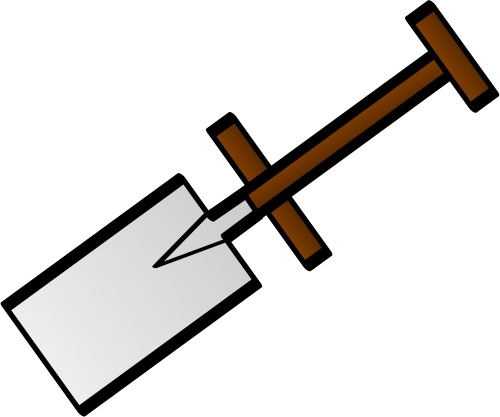
A remarkable character, Norton-Griffiths had, before the war, run a civil engineering company specialising in the construction of bridges, tunnels, railways, buildings and docks across the world. He had the inspired idea of transferring to the military sphere a particular tunnelling technique used by his workers when digging sewers in London and Manchester. Lying on a cross-shaped frame facing the wall he was breaking through, the worker used a shovel, braced with his feet, to remove the soil little by little. Summoned on 12 February 1915 to the office of the Secretary of State for War, Lord Kitchener, Norton-Griffiths did not hesitate to lie down on the floor and mime the posture of his employees. Given the situation on the front line, Kitchener granted Norton-Griffiths full powers to develop tunnelling companies. Apart from the commander-in-chief of the armies, he was the only man in wartime to be given such wide freedom of action.[8]
On the evening of his meeting with the Secretary of State for War, John Norton-Griffiths, now commissioned as a Major in the Royal Engineers, crossed the Channel accompanied by two associates: James Leeming and Foreman Miles. After several inspections in the area around Béthune, where British troops had suffered their first setbacks, and then in Flanders, Norton-Griffiths concluded that the clay subsoil made it possible to use his tunnelling method. He then set in motion the creation of eight companies, four for each army holding the front. Their strength was calculated on the basis of three shifts a day, working on an average of twelve galleries at once, requiring at least 269 men. Norton-Griffiths asked James Leeming to return to London and raise an initial group of around twenty workers from his own firm. On Thursday, 17 February 1915, several men working beneath the city of Manchester decided to follow their charismatic employer into the war. Three days later, they found themselves working beneath the trenches at Givenchy, near La Bassée. The small core of Norton-Griffiths’ workers was joined in France by twelve miners recruited from three regiments.[9] The nucleus of the very first unit, the 170th Tunnelling Company, was now in place at the front.
Once the creation of the tunnelling companies had been officially approved on 19 February, John Norton-Griffiths began to travel regularly between France and Britain. He took advantage of these constant journeys to bring back with him one or two men, commissioned as officers, along with several of his own workers or miners, hastily turned into soldiers. In France, he did not hesitate to range across the battlefield in search of volunteers. Perhaps most amusingly, he used his personal Rolls-Royce instead of the less comfortable army vehicles.[10] The car also allowed him to transport a few “emergency rations” in the form of bottles of whisky, smuggled into the country and destined for the officers commanding the units from which the tunnellers were recruited. Five companies were already at work in embryonic form, even as their numbers continued to grow. At the same time, recruitment began in Britain in order to bring the 170th, 171st, 172nd, 173rd and 174th up to strength, and to raise three additional companies, numbered 175, 176 and 177.
By the end of February, Norton-Griffiths' companies were already embedded across the front: the 170th driving galleries at Givenchy, near Béthune; the 171st and 172nd at work in the Ypres sector in Belgium.[11] March brought the 173rd and 174th, taking up positions at Fauquissart, near Neuve Chapelle (Pas-de-Calais), and at Houplines, to the north-east of Armentières (Nord),[12] with three further companies—the 175th, 176th and 177th—deployed in the same stretch. The former Mining Section Brigades were not disbanded but were attached, for a few weeks, to the new tunnelling companies. In this way they trained in Norton-Griffiths’ distinctive tunnelling method and continued to work independently until the end of 1916, when they were finally broken up.[13] The miners who had made up these brigades did not all return to their original infantry units; the great majority carried on underground work in the new tunnelling companies.[14]
Underground activity on the British side intensified dramatically as more fighters arrived, while across no man’s land the Germans pressed on with their own operations. Within weeks, the tunnellers were engaged in combat below ground: in April, the 172nd Tunnelling Company fired explosive charges at Hill 60, near Ypres;[15] in May, the 173rd detonated several mines on the Aubers Ridge, near Neuve-Chapelle;[16] and in June, the 176th supported a French offensive at Givenchy.[17]
With the British relief north of the Somme, which began at the end of July, the 174th Tunnelling Company was transferred to Bray, south of Albert (Somme). Guided by French sappers, Laurence Hill discovered a geology completely different from that in which the tunnelling units had been operating since their creation. At the Tambour du Clos, as in the rest of Picardy and Artois, the subsoil consists of a high chalk plateau that in places comes almost to the surface. The pick now replaced Norton-Griffiths’ tunnelling technique, which was impossible to use in this hard subsoil. The 174th still lacked sufficient tunnellers. New recruits were arriving every day from Britain, with no training and no knowledge at all of military life, yet even with these reinforcements the strength of the 174th remained inadequate to take over the French underground operations in this sector. The situation did not improve, despite the creation of two new companies. Placed temporarily under the authority of the French corps of engineers, the 178th Tunnelling Company mustered only a cadre of two officers and 130 men, who joined the 174th at the Tambour du Clos, while the 179th had only two officers and eighty men, who set to work at La Boisselle, north of Albert. The French were therefore obliged to keep their sapper units fighting alongside their allies for several more months.
The military authorities had few options for filling the ranks of the various tunnelling companies. Infantry soldiers were even called upon to assist the teams underground.[18] Nearly a thousand men could be attached to a single company. These men did not, however, replace the tunnellers at the working face; that task had to remain in the hands of specialists. New units were still being organised during September, but underground operations at the front required an ever-greater number of tunnellers. London quickly found an obvious solution by turning to its Dominions, the self-governing states within the British Empire where mining employed a significant share of the population—a dormant fighting force. On 10 September 1915, the War Office in London issued an appeal to the governments of Canada, Australia, New Zealand and South Africa for the formation of overseas tunnelling companies.[19] The Dominion of New Zealand was the first to respond.
Chapter 1
The Tunnellers from the AntipodesNotes
- 1.
Alexander Barrie, War Underground, London, Frederick Muller Limited, 1962, p. 94.
- 2.
Grant W. Grieve and Bernard Newman, Tunnellers: The Story of the Tunnelling Companies, Royal Engineers, during the World War, London, Herbert Jenkins Limited, 1936, p. 65.
- 3.
Tony Bridgland and Anne Morgan, Tunnel-master & Arsonist of the Great War: The Norton-Griffiths Story, Barnsley, Leo Cooper, 2003, p. 130.
- 4.
Grant W. Grieve and Bernard Newman, Tunnellers…, op. cit., p. 25-26.
- 5.
Ibid.
- 6.
Peter Barton, Peter Doyle and Johan Vandewalle, Beneath Flanders Fields: The Tunnellers’ War 1914-18, Gloucestershire, Spellmount Publishers, 2007 (orig. ed. 2004), p. 55.
- 7.
Grant W. Grieve and Bernard Newman, Tunnellers…, op. cit., p. 30.
- 8.
Peter Barton, Peter Doyle and Johan Vandewalle, Beneath Flanders Fields…, op. cit., p. 60.
- 9.
Grant W. Grieve and Bernard Newman, Tunnellers…, op. cit., p. 36.
- 10.
Ibid., p. 38.
- 11.
Ibid., p. 43.
- 12.
Ibid., p. 44.
- 13.
Peter Barton, Peter Doyle and Johan Vandewalle, Beneath Flanders Fields…, op. cit., p. 55.
- 14.
Ibid.
- 15.
Simon Jones, Underground Warfare 1914-1918, Barnsley, Pen & Sword Military, 2010, p. 77.
- 16.
Ibid., p. 81.
- 17.
Ibid., p. 84.
- 18.
Grant W. Grieve and Bernard Newman, Tunnellers…, op. cit., p. 68, “To ensure the best service from a Tunnelling Company, it is necessary to supply it with a large infantry working party to remove the spoil quickly from the mines and dispose of it on the surface, and also to attend to the working of the ventilation fans and water pumps.”
- 19.
Te Rua Mahara o te Kāwanatanga Archives New Zealand, AD 1 Box 1348 62/23, Formation of Corps - Tunnelling Company - Formation of for service abroad, 1914-1915. Call for the Creation of Tunnelling Companies in the Dominions.
How to cite this page
Anthony Byledbal, “Prologue”, in Kiwis Dig Tunnels Too, New Zealand Tunnellers, 2017. Available at: